
Sun Allergy? Here’s what you need to know!
Allergies could be uncomfortable, we can help you. Schedule your appointment today.
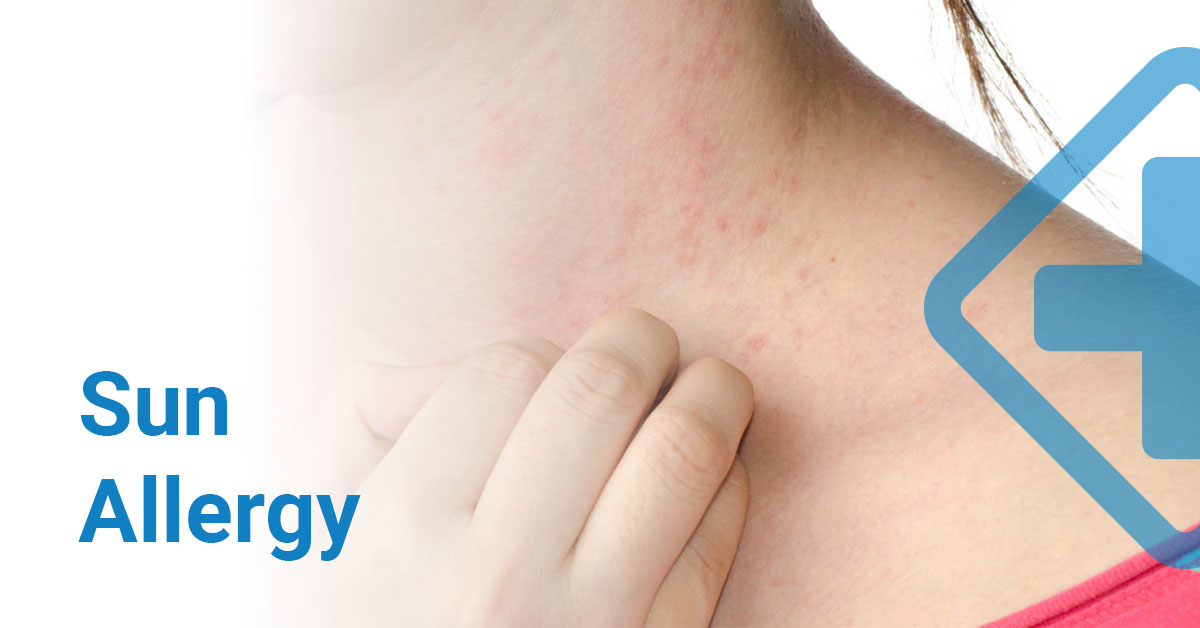
Sun allergy is commonly used to describe a series of conditions in which a red rash occurs on the skin that is often accompanied by itching or stinging due to exposure to sunlight.
There are different forms of sun allergy, the most common being the polymorphic light rash. Other people have a hereditary type of sun allergy, and still, others are triggered by a combination of factors, such as a drug, a perfume, or skin exposure to a plant.
When there is a mild case of sun allergy, it can disappear without the need for treatment. A Dermatologist can prescribe creams or medicines for treatment in stronger cases, and in cases of severe sun allergy, preventive measures must be taken.
Sun allergy is a reaction of the immune system. The most common places where this reaction becomes visible include the "V" of the neck, the back of the hands, the outer surface of the arms and the lower legs.
Symptoms of Sun Allergy:
There are many variations in how the skin is affected by a sun allergy looks; however, some signs and symptoms may include
-
Redness
-
Itching or pain
-
Blisters or hives
-
Scales, scabs, or bleeding
-
Tiny lumps that can merge and form larger patches
Signs and symptoms usually occur on skin that has been exposed to the sun and develops within minutes and hours after exposure to the sun.
Causes:
The causes why some people develop sun allergy, and others are not yet known for sure; however, in many cases, hereditary traits may play a role. In other cases, certain chemicals, medications, and underlying diseases can cause increased sensitivity of the skin to the sun.
Risk factors:
-
Race: Sun allergies are more common in fair-skinned people. However, anyone can suffer from sun allergy
-
Skin diseases: suffering from skin disease such as dermatitis, increases the risk of sun allergy
-
Hereditary Factor-People with blood relatives who have a sun allergy are more likely to develop a sun allergy
-
Medications: Taking some medications speeds up the sunburn process on the skin
-
Substances such as perfumes, disinfectants-some of the symptoms of sun allergy develop when the skin is in contact with this substance and then in sunlight
When to consult a doctor?
Don't hesitate to consult your Dermatologist if after exposure to the sun you experience skin reactions that are unusual, uncomfortable or affect your quality of life.
Diagnosis:
The Dermatologist will make an exam of your skin and a medical and family history to reach a diagnosis. There are some cases in which the Dermatologist requests additional tests such as blood tests, skin biopsy, or photographic tests to rule out other skin problems such as Eczema and Lupus.
Living with a Sun Allergy:
If you already have a sun allergy, take the following steps to prevent the signs and symptoms of an allergic reaction.
- Use sunscreen: Using UVA and UVB protection is essential. Use a broad-spectrum sunscreen with an SPF of at least 30. Ideally, use sunscreen throughout the year daily; if you are swimming or sweating, reapply the sunscreen every few months.
- Avoid exposure to too much sunlight: Avoid sudden exposure to sunlight, and gradually increase the amount of time you spend outdoors so that your skin cells slowly adapt to the sunlight.
- Avoid going out in the sun during peak hours: Try not to expose your skin to too much sunlight between 10 a.m. and 4 p.m.
- Try to wear protective clothing: Also, wear sunglasses that offer UV protection, wide-brimmed hats, and long sleeve shirts are recommended options when you know you will have to expose yourself to sunlight.
- Pay attention to the triggers: Start paying closer attention to see if any particular substance is causing reactions on your skin, whether it's a medication, perfume, or other chemicals.
BlueNetHospitals - Hospital Los Cabos
BlueNet Hospitals.







Trending Topics
Pregnancy infections (TORCH)
Risks, testing, and prevention
Anemia in Women of Reproductive Age
Symptoms, Causes, and Prevention
Head and Neck Surgical Oncologist: The Key Specialist in Your Diagnosis
Discover what they do, which conditions they treat, and when it’s important to seek an evaluation.
Newborn Metabolic Screening: The Test That Helps Detect Diseases from the First Days of Life.
Learn what newborn screening is, when it should be performed, and why it is a fundamental test for the early detection of diseases in newborns.
Health Library
Dermatology
- Do You Need an Appointment with a Specialist?
- call us
- write us
- let's talk

